
The AI Decision Matrix
Many leaders ask which tasks they should automate, when the real question is: How should decision-making authority be divided between humans and algorithms?
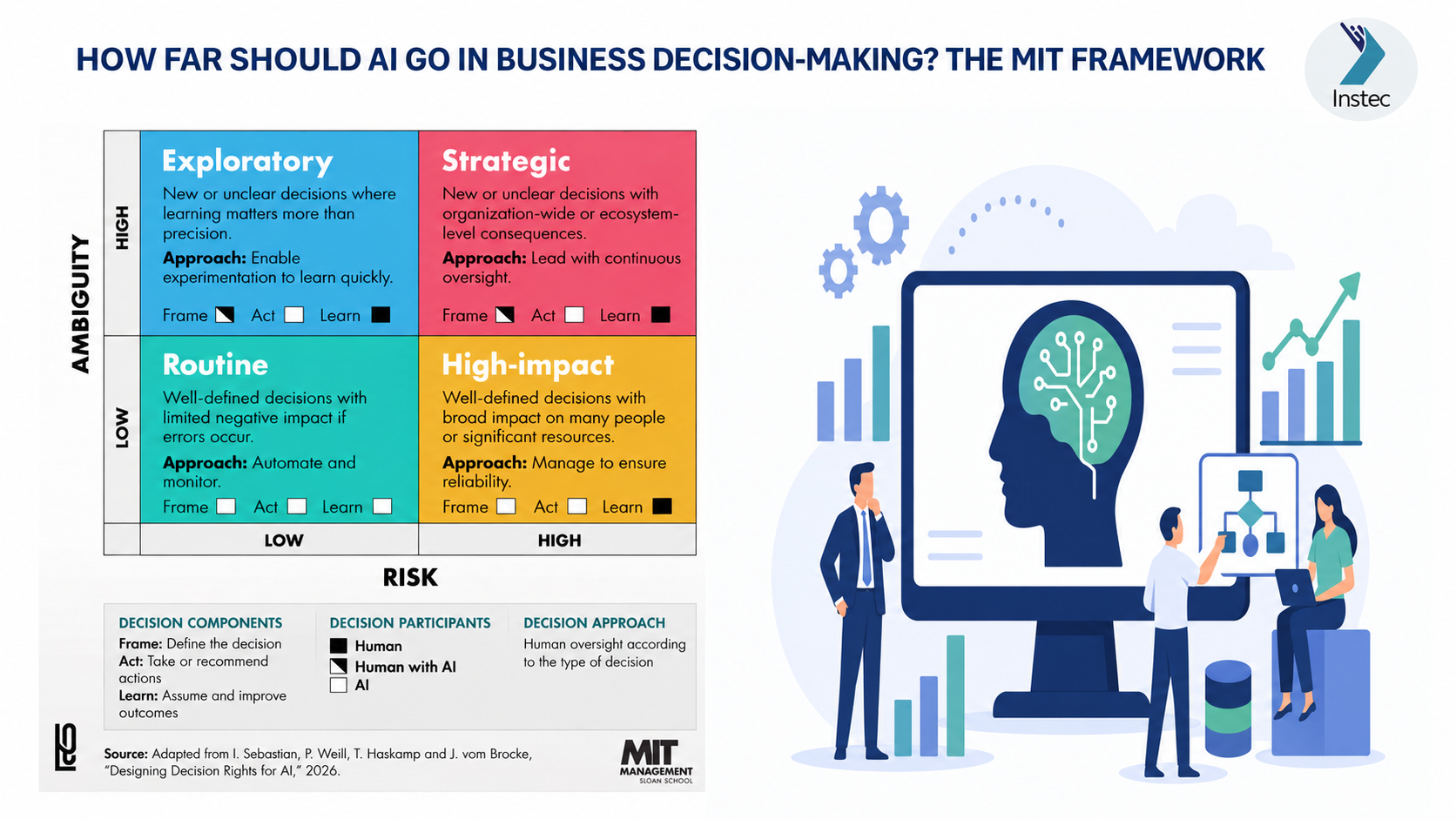
*MIT CISR* proposes a simple approach based on two variables: Ambiguity (how clearly the problem is defined) and Risk (the severity of an error). Decisions are classified as follows:
• Routine decisions (Low ambiguity / Low risk): Full automation. AI acts and learns independently.
• High-impact decisions (Low ambiguity / High risk): Automation with human oversight and exception management.
• Exploratory decisions (High ambiguity / Low risk): Joint experimentation. Humans and algorithms co-create solutions.
• Strategic decisions (High ambiguity / High risk): Full human leadership. AI provides data, but the leader exercises judgment.
Success depends less on the technology itself and more on knowing which quadrant applies to each decision.
Delegating strategy to an algorithm or using people for repetitive tasks are both costly mistakes.
Which decisions in your organization urgently need to be redefined using this model?
\#ArtificialIntelligence #AIGovernance #Leadership #MIT
Would you like to apply this idea to your business?
Tell us about your situation and we will help you identify a practical next step.
Talk to an advisor