
Sustainable BPM adoption is not only about improving processes. It means developing organizational capabilities that enable companies to compete, adapt to change and remain resilient over time.
With this sixth installment, we conclude our series on the sustainable adoption of Business Process Management (BPM). The purpose of this final step is to integrate the previous lessons and guide process management toward sustainable results.
The Objective of Sustainable BPM Adoption
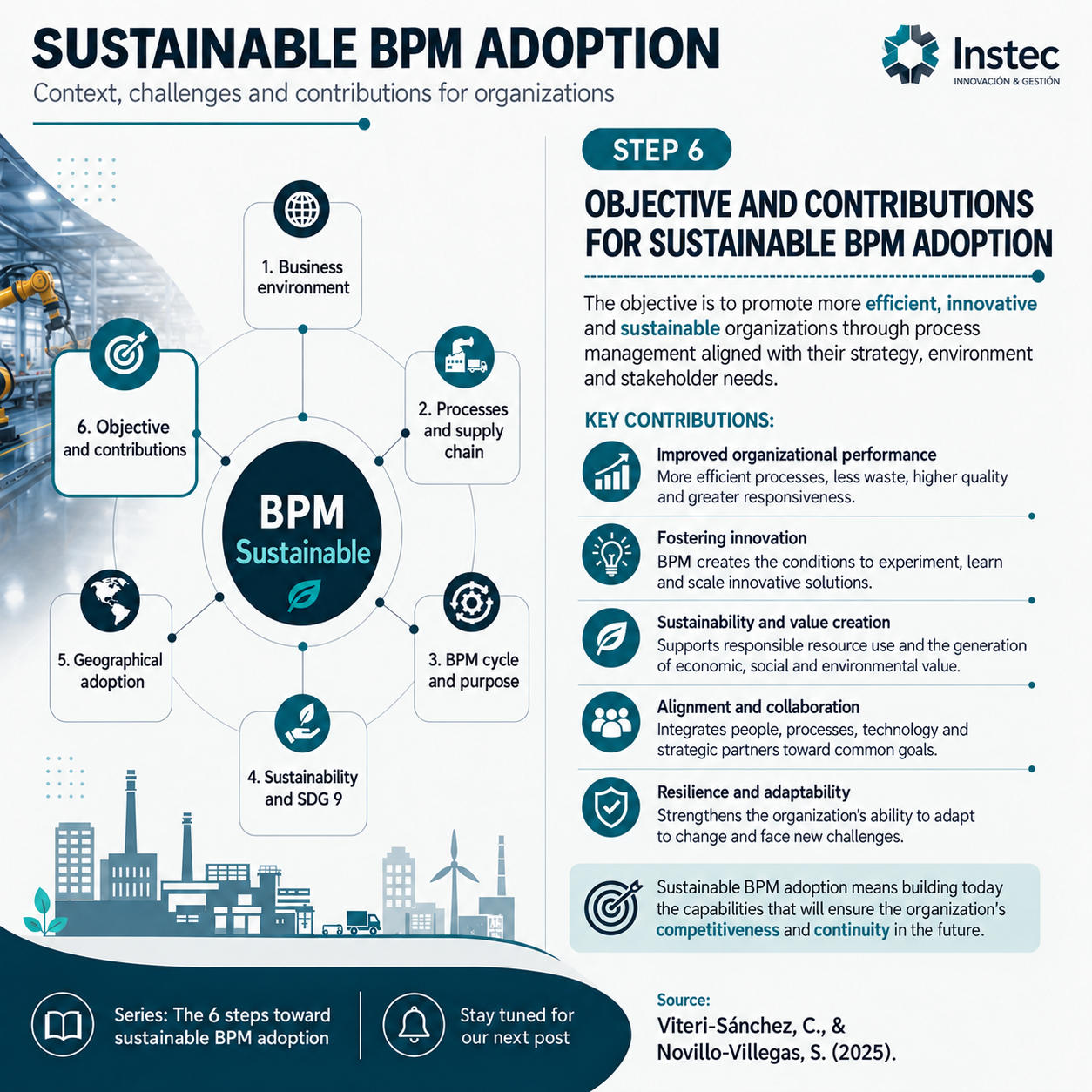
The objective is to promote more efficient, innovative and sustainable organizations through process management aligned with their strategy, environment and stakeholder needs.
Key Contributions
Improved Organizational Performance
Well-implemented process management helps reduce waste, improve quality, make better use of resources and strengthen the organization’s ability to respond.
Fostering Innovation
BPM creates the conditions required to experiment, learn and develop solutions that can be implemented and scaled throughout the organization.
Sustainability and Value Creation
Process management encourages the responsible use of resources and contributes to the creation of economic, social and environmental value.
Alignment and Collaboration
BPM connects people, processes, technology and strategic partners around shared objectives, strengthening coordination and collaborative work.
Resilience and Adaptability
An organization that understands, measures and improves its processes is better prepared to respond to changes in its environment and face new challenges.
A Transformation That Continues
We have completed the six steps toward sustainable BPM adoption, but the transformation is only beginning. The next challenge is to put these principles into practice and turn continuous improvement into sustainable value.
Source: Viteri-Sánchez, C., and Novillo-Villegas, S. (2025).
Would you like to apply this idea to your business?
Tell us about your situation and we will help you identify a practical next step.
Talk to an advisor